

Lebanon hosts the largest number of refugees in the world per capita. There are around 1.5 million Syrian refugees in the country.
Alongside Lebanese locals, Syrian refugees are among those most affected by this crisis. Some are crossing back into Syria despite ongoing instability there. They urgently need support to survive and rebuild.
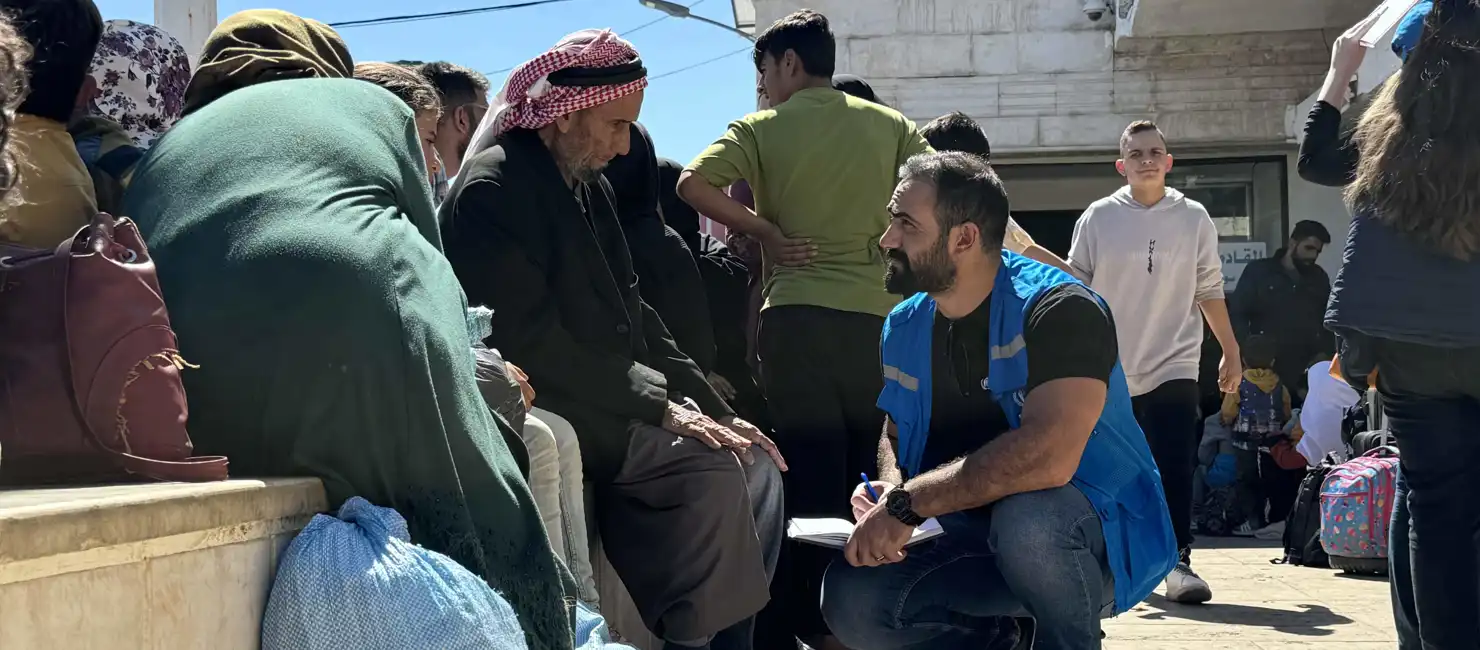
UNHCR has been working in Lebanon for over 60 years, assisting both Lebanese and refugee communities in times of crisis. Dedicated teams in Lebanon are working with authorities to provide shelter, relief items, emergency cash, healthcare and psychological support. Teams are also at the Syrian border, providing vital aid and guidance for those seeking safety.
Violence and destruction have left families reeling. Please donate to our Lebanon Emergency Appeal to reach more people with life-saving support.
Your donation in action
UNHCR is in Lebanon and Syria, delivering life-saving aid to displaced families. With your help, we can provide emergency cash, healthcare, and relief items such as blankets, mattresses and solar lamps for those in need.
Your gift can provide emergency shelter to protect families forced to flee their homes.
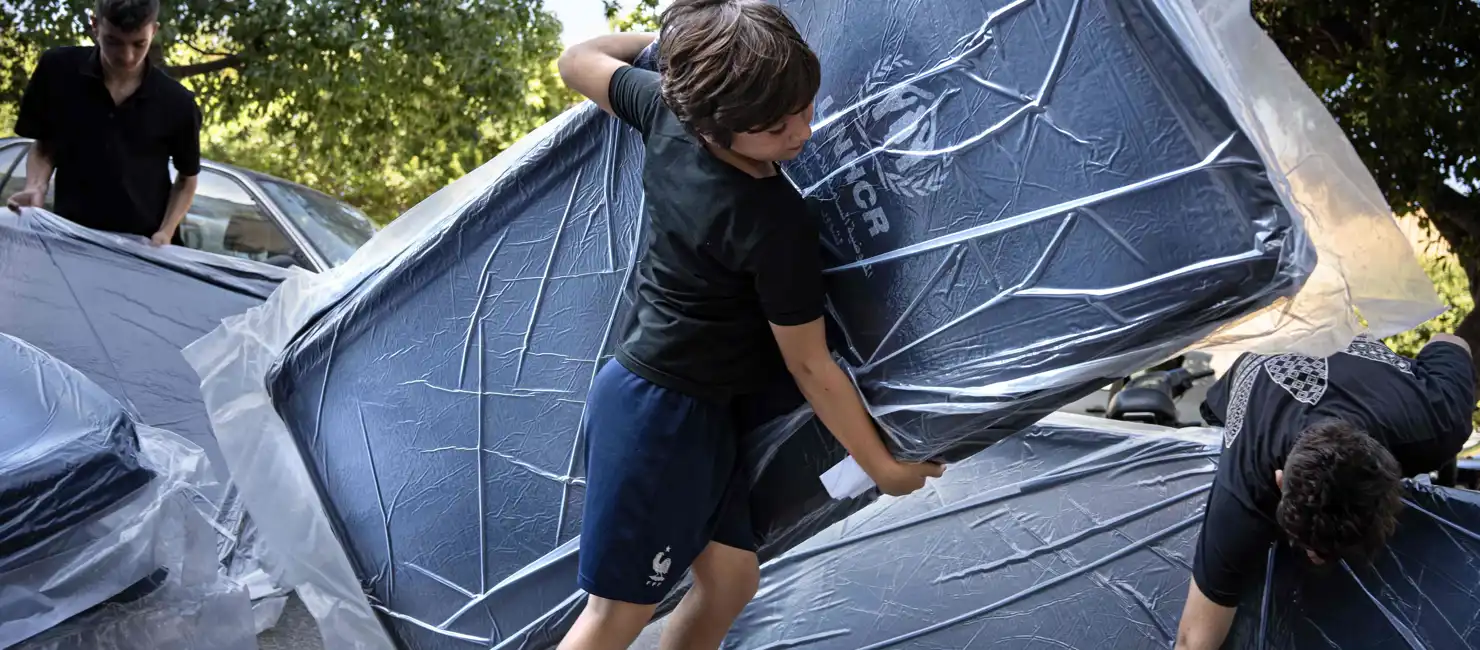
Your gift can send essential items like mattresses, blankets and soap to people who've lost everything.
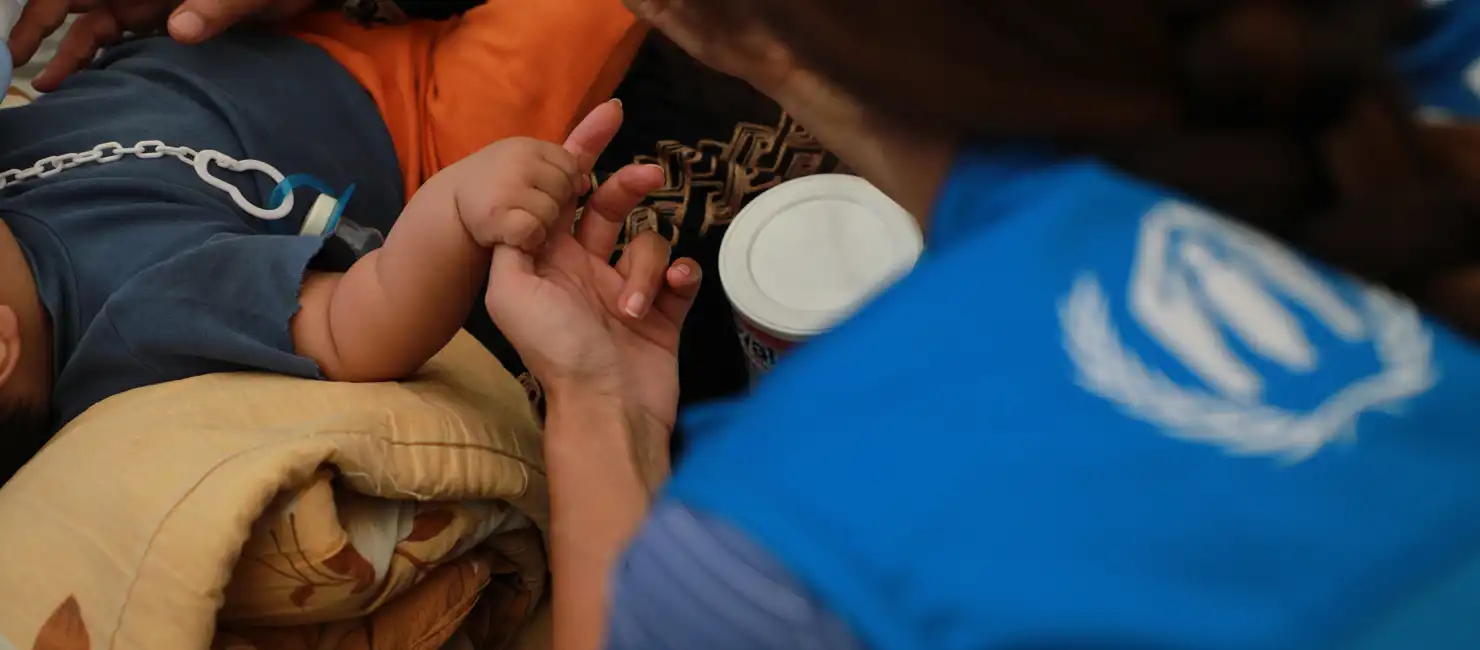
Your gift can protect vulnerable women and children during this time of heightened risk.
“I suddenly heard strikes hitting the neighbourhood. I immediately woke my son and daughter and we left our home. Everyone was fleeing their homes, shouting, crying.”
Sana and her children were forced to flee southern Beirut and seek shelter at a stadium.

Voices from Lebanon
Fatima: “I wish we could return home and for the war to end.”
Fatima was forced to flee on foot and, like so many others, faces ongoing displacement and uncertainty.
“We had no means of transportation. The traffic, the crowds, everyone was out on the roads. It was terrifying. Words cannot describe it. It’s very difficult. I wish everything would go back to the way it was. I wish we could return home and for the war to end.”
Ghadir: “There is so much destruction.”
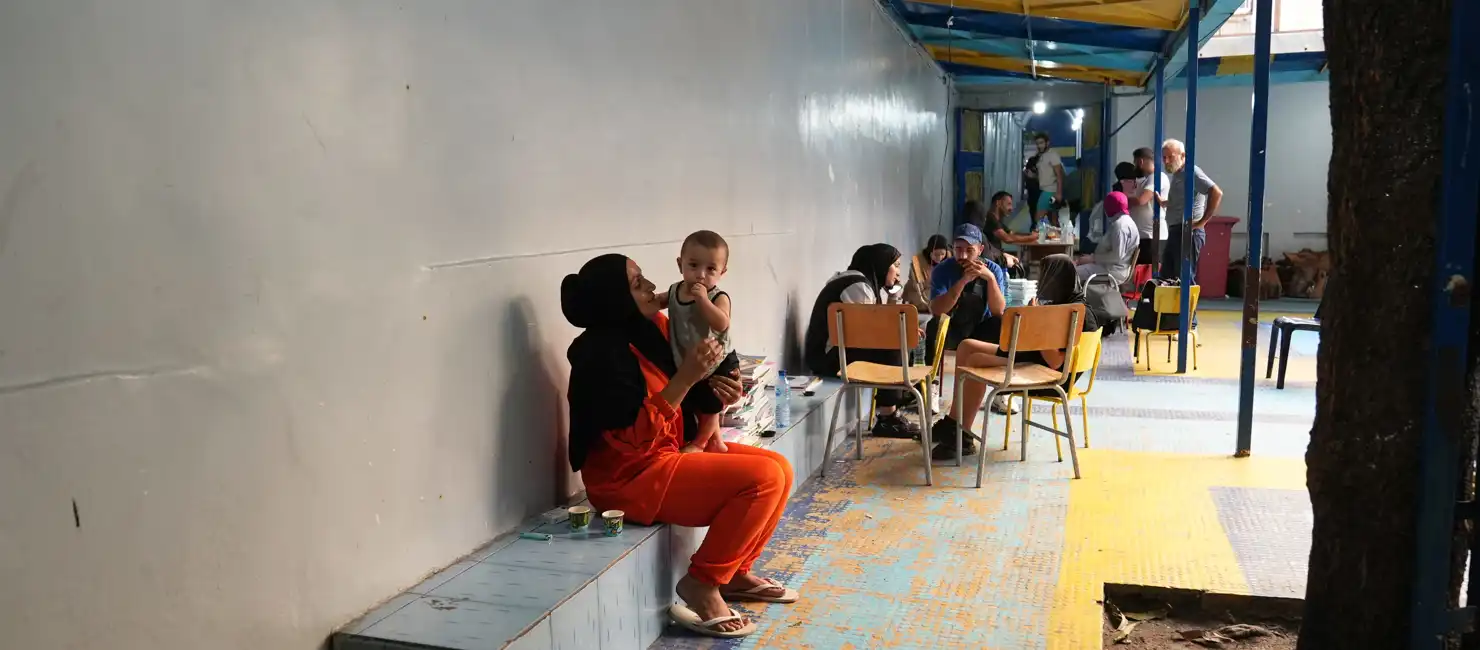
Ghadir and her family were displaced from the southern suburbs of Beirut and are now staying at a temporary shelter.
“We were displaced from the south and came to this school. The main difficulties we faced were food and water, and above all the lack of privacy. We would sleep while everyone could see and hear us. Sometimes the tarp would fall down.”
At shelters, UNHCR teams are installing partitions, giving families more privacy and security, and distributing relief items such as blankets and mattresses.
“There is a huge difference with the partitions made, whether in terms of noise or privacy," says Ghadir, who is still unable to return home safely.
“As soon as they announced the 10-day ceasefire, we went back to our village for just one day. But we didn’t feel the situation was stable enough for us to return and settle there again. There is so much destruction, so we came back to the shelter.
“My biggest wish is for this whole crisis to end.”
Omar: “My children grew up knowing nothing but war.”
Omar, 30, fled the civil war in Syria four years ago. He was building a new life with his three children, aged 8 – 12, in the Bekaa valley. When conflict erupted in March, his family was plunged right back into the midst of war.
At 3am, Omar says intense shelling caused a nearby building housing Syrian refugee families to collapse, with children buried under the rubble. Terrified the same would happen to them, Omar and his children spent the rest of the night sleeping on the streets. The next day, they gathered their belongings and fled.
With few options, Omar decided to cross back into Syria. Border crossings have increased since the escalation of hostilities in March, with Syrians and Lebanese alike seeking stability.
“We hope the situation calms down, that people can stay in their homes and feel safe,” says Omar. “My children grew up knowing nothing but war. If you ask them, they talk about bombs and shelling. I wish for goodness and peace for everyone.”
Sana: “Everyone was fleeing their homes, shouting, crying.”
Sana, 51, was preparing food early in the morning when violence erupted.
“I was awake for suhoor. It was 3am,” she says. “I suddenly heard strikes hitting the neighbourhood. I had no idea what was happening. I immediately woke my son and daughter and we left home. Everyone was fleeing their homes, shouting, crying.
“We spent the night in the street. Then we went back home to take a few clothes quickly and leave again. We went to my brother’s home, until Israeli evacuation orders came. Then we went to the coastal area in Beirut, to be safe. Finally we came to this stadium and took shelter.”
Zahiya: “I fainted at one point. There was no food and no water.”
Zahiya, 65, and her cousin Majori fled their village near the border with Israel in the early hours of the morning, taking a long and arduous journey to Beirut, where they are now staying at a temporary shelter.
“As soon as I heard the sounds, I took my bag and left my home. I passed by the house of my relatives that was bombed. They were killed, my cousins and their children," says Zahiya.
“It took 28 hours until we arrived in Beirut. I was suffering. I fainted at one point – there was no food and no water.
“It’s the third time I’m displaced. First in 2006 and then in September 2025, and now. I escaped death twice.”
Lebanon Emergency FAQs
What difference will a donation make?

Donations can provide displaced families with shelter, cash assistance, and emergency supplies like blankets and mattresses. Donations can also provide much-needed psychological support, including for children who are experiencing trauma and anxiety amidst so much violence.
How is UNHCR responding?
UNHCR is expanding its life-saving assistance across Lebanon. Teams are distributing emergency cash and relief items such as tents, blankets and hygiene supplies. UNHCR and partners are also helping to repair and maintain collective shelters such as schools that are housing vulnerable displaced families.
UNHCR is supporting both Lebanese locals and refugees living in Lebanon, many of them Syrian. UNHCR is at the Syrian border, assisting refugee families looking to return to Syria due to the escalating insecurity in Lebanon.
Is this connected to other conflicts in the region?
Yes. Since late February, escalating hostilities in Iran, Lebanon and other countries have triggered a humanitarian crisis with impacts across the Middle East region. Many of these events are unfolding in fragile communities where people are already displaced by conflict or disaster and struggling to survive.
Isn’t there a ceasefire in place?
Despite partial ceasefire announcements, strikes and insecurity are continuing across southern Lebanon, with civilians still being forced to flee their homes. More than a million people remain displaced, including 130,000 who are residing in shelters such as schools and mosques.
What is happening in Lebanon?
Israeli attacks are intensifying in southern Lebanon, killing people, destroying homes, and damaging critical infrastructure.
Significant parts of the country are now under Israeli occupation or evacuation orders. More than 1,500 buildings have been destroyed. Over one million people are displaced, or around one-sixth of the population. Around 130,000 people are residing in 630 collective shelters such as schools.
Our fundraising impact
The majority of funds raised by Aotearoa New Zealand for UNHCR are directed to UNHCR’s emergency operations, providing the ready funds and resources to respond quickly and effectively in situations of crisis and disaster.